Driving smarter building renovations at EU Sustainable Energy Week 2026
At EUSEW 2026, iEPB presented its approach to reducing duplication, improving interoperability and turning building performance data into actionable renovation strategies.
On 11 June, iEPB participated in the Policy Conference of the EUSEW-European Sustainable Energy Week 2026, in the session “Boosting the potential of building renovations through renovation passports, EPCs and the SRI”.
The session was organised by IVE and UIPI, together with EPB Center and R2M Solution, in collaboration with DG ENER, ADENE, the Spanish Ministry of Housing and Urban Agenda, and several European projects working on the implementation of the recast Energy Performance of Buildings Directive (EPBD).
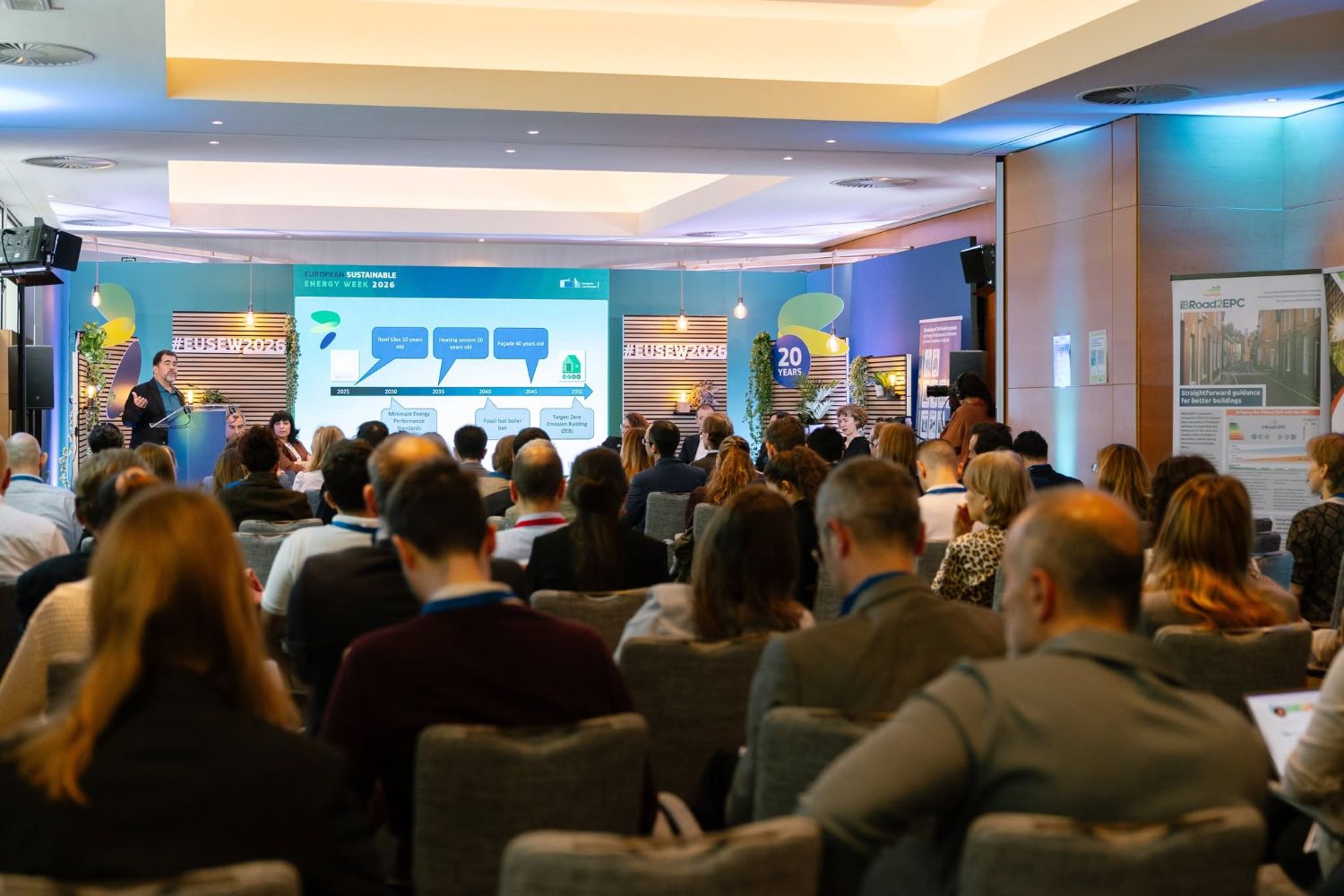
The debate brought together representatives from the European Commission, national authorities from Portugal and Spain, and EU projects addressing Energy Performance Certificates (EPCs), renovation passports and the Smart Readiness Indicator (SRI). The aim was to discuss how these instruments can move from the regulatory framework towards practical, coordinated and scalable implementation.
The opening intervention from the European Commission’s Directorate-General for Energy framed the discussion within the broader implementation of the recast EPBD and the need to accelerate the renovation of Europe’s building stock. The Commission highlighted the importance of strengthening existing instruments such as EPCs while further developing renovation passports and the SRI. A key message was that these tools should create synergies, avoid duplication and support Member States, professionals and building owners in moving from assessment to action.
Within this context, iEPB contributed to the discussion on integrated building performance assessment workflows. The project addressed one of the main challenges identified during the session: the fragmentation of building performance assessments. EPCs, renovation passports and the SRI often require similar building information, yet they are frequently managed through separate procedures, tools and data structures. This can result in repeated data collection, inconsistencies between assessments, additional costs and lower trust in the market.
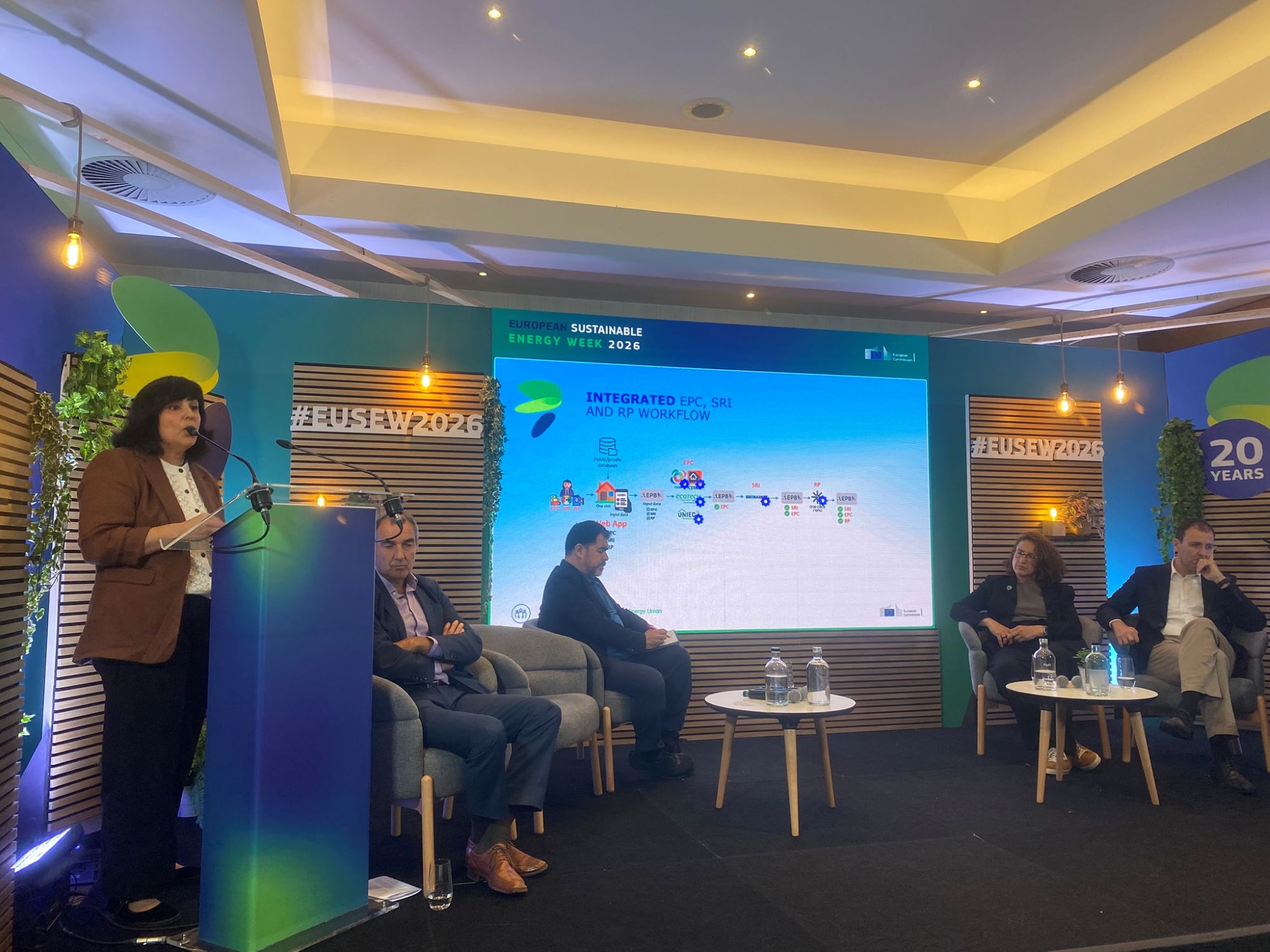
To address this challenge, iEPB is developing a common data model for integrated EPB assessments, initially focused on EPCs, renovation passports and the SRI, while remaining scalable to other assessments such as life cycle assessment. The approach is based on a simple principle: collect building information once and reuse it across multiple assessment tools. This reduces the burden on professionals, improves interoperability and increases the value of assessments for end users.
Rather than replacing existing official methodologies, the project is developing an iEPB schema that can be implemented within existing tools. In practice, an assessor could collect the necessary information during a single site visit, complement it with data from public or private databases where available, and generate an iEPB file. This file can then be used across different tools to perform EPC, SRI and renovation passport assessments, progressively integrating their results into a shared interoperable structure.
The iEPB web app supports the full assessment workflow, including data collection, management and results visualisation within a single environment. It facilitates the exchange and reuse of information between different assessment tools and integrates their outputs, helping users gain a more complete picture of a building’s performance and renovation potential while avoiding fragmented information.
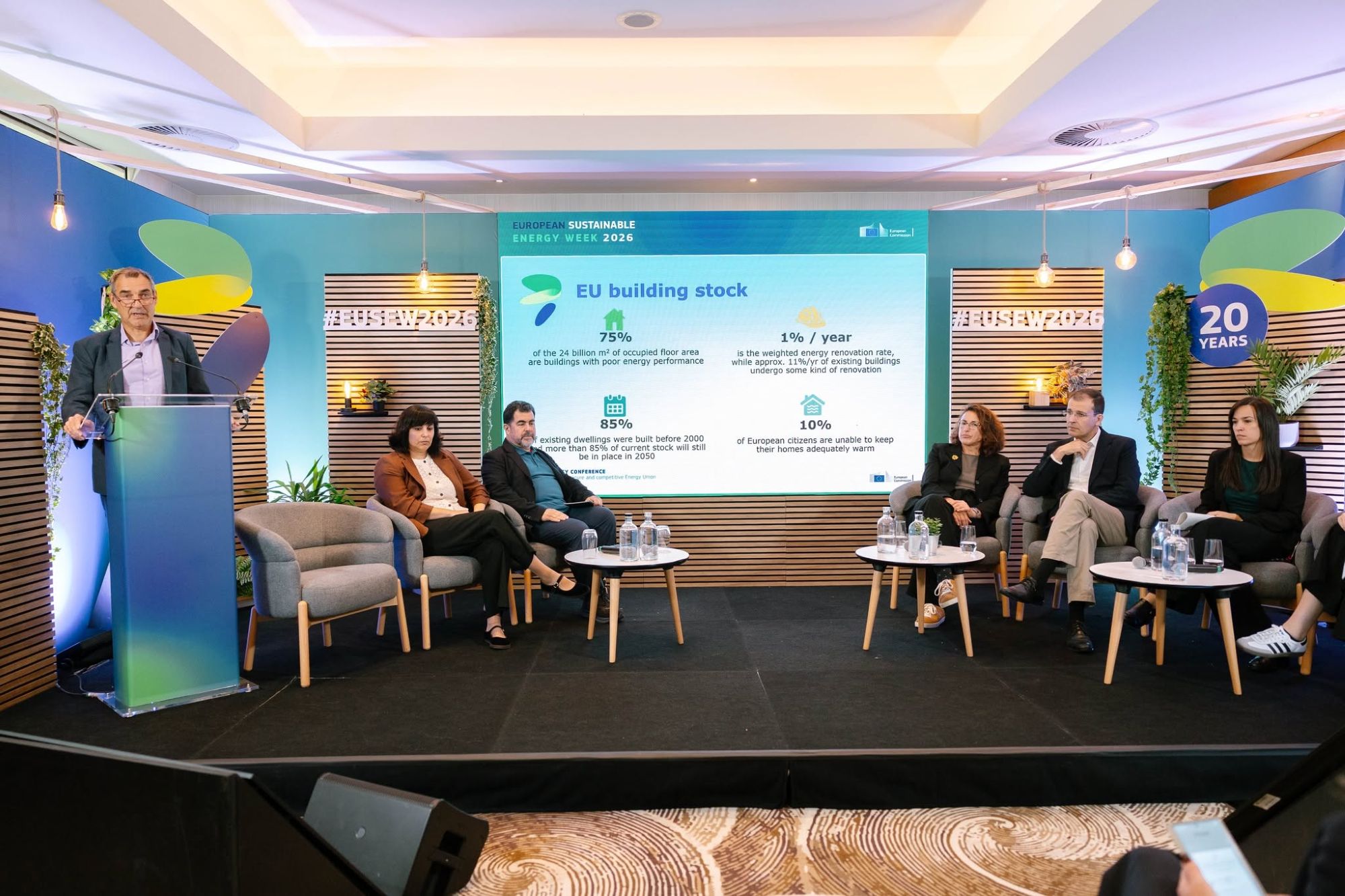
The session also showcased complementary approaches from other EU projects, such as OneClickRENO, iBRoad2EPC, SmarterEPC and openBEP4EU. Besides, national perspectives from Portugal and Spain provided practical examples of how renovation passports may be implemented. Portugal approach is to integrate the renovation passport into the existing EPC scheme, transforming current EPC recommendations into a tool that supports renovation planning, financing and monitoring of renovation objectives. Spain presented its ongoing EPBD transposition process and efforts to coordinate EPCs, renovation passports and the SRI while linking them with existing instruments such as the Building Evaluation Report and broader renovation planning tools.
Several key conclusions emerged from the session. EU countries are moving from policy design to the practical implementation of renovation passports. EPCs, renovation passports and the SRI should be developed as connected processes based on shared building data, reducing duplication and fragmented outputs. Their success will ultimately depend on their ability to drive real renovation action by linking technical recommendations with financing, professional advice and public support schemes.
For iEPB, the session reinforced the importance of integrated, interoperable and user-oriented building performance assessments. By enabling data reuse across EPCs, renovation passports and the SRI, iEPB helps reduce administrative burden, improve consistency and strengthen the role of building performance information in accelerating Europe’s renovation wave.
To know more, listen to the full recording of the session here.
Featured image by Francois Genon-Unsplash


