Smart Readiness in action: join iEPB at the SRI joint event

Events | 2025.05.06

From hands-on project results to expert roundtables, the SRI Joint Event brings together the latest thinking on smart readiness and sustainable innovation in Europe.

How smart is your building?

Discover the latest developments in smart technologies for buildings at the upcoming SRI Joint Event, where the iEPB project will be present to share insights, progress, and engage in key discussions on smart readiness and energy performance.

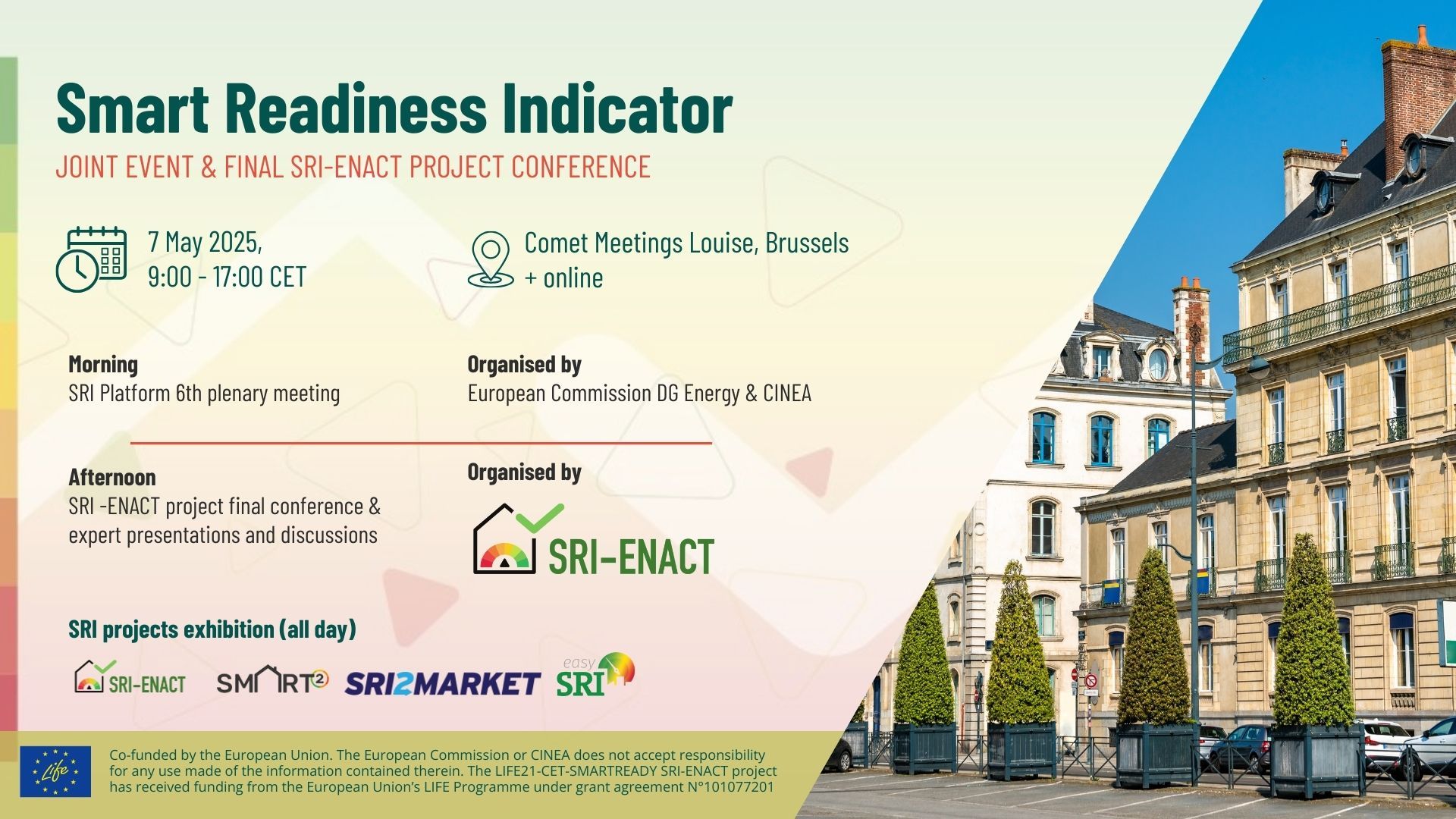
Organized under the European Commission’s Smart Readiness Indicator (SRI) initiative, this event offers a deep dive into how buildings can support decarbonization while enhancing energy efficiency and occupant comfort. It combines the SRI Platform’s 6th Plenary Meeting with the final conference of the SRI-ENACT project, creating a unique forum for dialogue between policymakers, experts, and stakeholders.

  • morning session: updates on EU SRI policies, support tools, and Member State implementation
  • afternoon session: results from the SRI-ENACT project, auditor experiences, expert talks, and panels
  • all-day exhibition: featuring projects like iEPB and others funded under LIFE and Horizon Europe
  • networking: enjoy conversations and connections on the Comet venue terrace

Whether you’re a policymaker, researcher, real estate stakeholder, or industry professional, this is your chance to explore smart building solutions and see how initiatives like iEPB are shaping a more energy-efficient, sustainable built environment.

Find more information about the event here.

Featured image by Najib Samatar- Unsplash

A tool for energy performance: iEPB launches its Standalone calculation application

Short news | 2025.04.02

The iEPB SRI StandALone calculation tool allows seamless integration of Smart Readiness Indicator assessments into third-party software solutions

The iEPB project is pleased to announce the launch of its StandAlone SRI calculation tool, targeted at all software developers within the framework of smart buildings, and beyond.

The iEPB SRI StandAlone calculation tool is a Python-based command-line application designed for third-party software developers looking to integrate Smart Readiness Indicator (SRI) calculations into their own platforms.

This tool does is specifically tailored for developers who require a flexible and efficient way to incorporate SRI assessments within broader energy performance and smart building solutions.

The tool is now available on GitHub: https://github.com/iEPBproject/SRIStandAlone 

Recognized as a key resource, the application is also featured on the European Commission’s official SRI page, under the SRI digital calculation tools section, together with other useful calculation tools of recent development.

By providing this open-source solution, the iEPB project continues to support the advancement of smart, energy-efficient buildings across Europe. It marks another step towards iEPB’s ambitious goal of optimizing and enhancing energy performance certifications in EU.

Featured image by AltumCode- Unsplash

Unlocking the potential of Energy Performance Certificates: a key to greener buildings

Articles | 2025.03.06

Energy Performance Certificates are key to improving building efficiency, but their reliability and harmonization remain challenges. With ambitious environmental targets at stake, Europe is racing to unlock their full potential and ensure they drive real change.

In Europe, buildings alone account for 40% of total energy consumption and for over one third of greenhouse gas emissions, associated with energy production. “About 75% of the European building stock is energy inefficient,” explains Rémi Collombet, Head of EU Policy of Efficient Buildings Europe, the leading industry association dedicated to advancing energy efficiency in Europe’s buildings. “This is a huge number, especially considering our goal of climate neutrality by 2050 and the fact that 85% of the buildings standing today will still be there in 2050.” Furthermore, when looking at how they are powered, we see that fossil fuels provide 80% of the energy. “When you look at the roadmap to climate neutrality, we have 25 years to act. This is a very short time, during which we’ll have to focus intensely on the building sector. So, if we’re serious about climate action, we need to address the building sector,” he exhorts.

According to some estimations, better-performing buildings can see their market value increase by up to 15%. Yet, a recent survey by the Brussels-based NGO International Union of Property Owners (UIPI) confirms that this is not yet a major driver for undertaking renovations, with owner-occupiers still primarily motivated by “maintenance,” “preserving properties,” “improving comfort,” and “reducing monthly expenses.” “Europe-wide, there’s growing awareness about energy efficiency, and tenants are starting to ask for it, but it’s not systematic yet. Its added value in rent and sale depends on the local market, and since the market is demand-driven, investments follow,” explains UIPI Secretary General Emmanuelle Causse. This may change due to heatwaves, but so far there’s a difference between climate zones, and interest remains lower in southern countries, she adds.

With the climate clock ticking and our environmental targets approaching, a European priority is now to encourage homeowners to renovate buildings. Fostering bottom-up engagement and information is among the goals of so-called “Energy Performance Certificates” (EPCs). “They measure the energy performance of buildings, just as the labels you find in stores measure the energy efficiency of washing machines. To issue them, a technician goes on site to assess parameters such as insulation and heating and cooling systems, feeds all this data into software, and the building receives a rating from A (energy efficient) to G (energy inefficient). This rating, which translates into a label, is accompanied by a report summarising all the assessments made and providing recommendations to improve the building’s performance,” explains Eva Segarra. PhD architect and researcher at IVE, Instituto Valenciano de la Edificación, she also coordinates iEPB, a European project aimed at overcoming existing deficiencies in design, implementation and synchronisation of EPCs with other certification instruments.

Indeed, EPCs still suffer from limited coverage and lack of harmonisation across European countries, which undermine their acceptance by tenants and owners and reduce their effectiveness for policymakers.  “At the moment, in some countries, there’s variability in the results provided by different certifiers. This inconsistency needs to be addressed to gain people’s trust, especially since EPCs increasingly influence property prices and national-level requirements,” says Collombet. The urgency of rebuilding trust towards this tool, is confirmed by the outcome a UIPI survey, asking landlords and property owners whether they considered them reliable: 40% of them answered “no”, citing that they provide a limited assessment that does not account for all technical aspects of a building. Two in five expressed no opinion, and only one in five viewed them positively. “Depending on the Member State, there are discrepancies in assessments, as well as differences in methodology and evaluative skills, leading to inconsistencies in their ratings, resulting in limited trust by property owners and other stakeholders,” echoes Causse.

This is also why the iEPB project aims to enhance synchronisation of EPCs and other certification instruments, such as the Smart Readiness Indicator, and the Building Renovation Passport. “This lack of integration makes the evaluation process extremely costly, time-consuming and confusing for both professionals and building owners,” explains Lucas Segarra. “Therefore, our idea is to counter this complexity by setting up what we call the ‘iEPB schema’, a common data model aimed at making all these assessments easier, cheaper and more reliable. Using common data for all evaluations would simplify data collection, exchange and integration, and allow not only to spare time and money, but also make them more consistent and reduce the risk of mistake.” To make this data model accessible to operators, citizens, and building owners, Segarra and her colleagues are developing a web application too. “It integrates EPCs, Smart Readiness Indicator, Building Renovation Passports, and any other future building evaluations into the same digital system,” she explains. “This web application has two interfaces. One to guide professionals through the data collection process in an intuitive way, and one providing end-users with clear insights, and allowing them to trace the energy record of their building and evaluate the outcomes of renovations by making different versions of the same certificate accessible over time.”

Among the efforts to provide Member States with more reliable and accurate EPCs, the need for a common database gathering data from all the European building stock was also recently stressed by the revised Energy Performance of Buildings Directive (EPBD), adopted last April. Among its targets: zero on-site fossil fuel emissions for all public buildings by 2028 and the renovation of 26% of the worst-performing non-residential buildings by 2033. “The targets are really ambitious, and I’m not sure they will be feasible. Households and individual owners are not opposed per se, but they need support. A lot also needs to be done in terms of raising awareness to help them understand the benefits of renovation,” comments Causse. “The EPBD includes different provisions regarding standards for new buildings, renovation requirements, improvements to the EPC framework, and updates to technical building systems,” adds Collombet. “So, it provides a comprehensive enabling framework, but the challenge now lies in ensuring that it actually delivers results. It’s great to have targets, but it’s even more important to have the means to achieve them.”

Hence, his call to stakeholders to take action and engage with national governments without delay: “In 2025, Member States will have a significant opportunity to design their National Building Renovation Plans—roadmaps from now until 2050 for decarbonising and renovating the building stock. These roadmaps must be designed in consultation with all stakeholders at the national level. So, this is the time for discussions to ensure alignment on the goals and how to achieve them.”

Furthermore, the concerns over gas prices, heightened by growing geopolitical tensions, serve as a reminder that 48 million Europeans currently live in energy poverty. “This is not only a matter of energy inefficiency and climate change, but also of public health, and very much a social issue, as vulnerable households mostly live in the worst-performing buildings” continues Collombet. “Tackling the energy efficiency of our buildings also means improving the lives of those who need it the most.”

Written by Diego Giuliani

Image generated by AI-Chatgtp
iEPB General Assembly fuels progress in Energy Performance Assessment

Short news | 2025.03.03

Partners met virtually for exchanging insights and driving strategic decisions for project advancement

iEPB recently held its General Assembly, bringing together partners to exchange information, share updates, and discuss project challenges. The event featured multiple interactive working sessions on key topics, including the configuration of the Web App’s data gathering section, the implementation of the iEPB schema in national EPC software, and the development of protocols for iEPB testing and evaluation.

A dedicated session on Training and Capacity Building explored strategies for assessing the knowledge and skills required by EP assessors, building effective training materials, and aligning learning timelines. The assembly also included an Exploitation Workshop to discuss pathways for maximizing project impact.

This meeting further strengthened the iEPB consortium’s commitment to revolutionizing energy performance assessments across Europe, and paved the way for the upcoming turning point of 18 months of the project life.

Featured image by Sigmund-via Unsplash

iEPB delivers its 2nd newsletter

Newsletter | 2024.12.12

The second newsletter of iEPB is out now: read more about the project updates

Welcome back to the newsletter of iEPB!

In recent months, the iEPB project has been fully dedicated to developing the common data model and associated tools. The iEPB common data schema has been finalized, and significant efforts have been dedicated to implementing it within EPC software across participating countries (Spain, The Netherlands and Austria). Simultaneously, the design and development of the iEPB web app have commenced. This app aims to enable a unified data collection process for EPC, SRI, and BRP assessments while providing an interactive, intuitive, and user-friendly visualization of the results for the end-users.

The development of the iEPB web app actively incorporates feedback from key stakeholders, including EPBD implementing bodies, building professionals, and product manufacturers/suppliers. To gather insights on potential benefits, challenges, and desired features, two workshops were held in Spain with 28 participants, alongside 48 interviews conducted across Spain, the Netherlands, and Austria. Notably, public administrations as EPBD implementing bodies, highlighted the iEPB schema as a promising tool to meet EPBD requirements for aggregated data and national databases.

And many more things happened in the project in the past months…read the whole newsletter here!

Featured image by Iva Rajovic-Unsplash

How homeowners can cut energy costs? iEPB answers to this question and more

Press release | 2024.12.03

A series of videos explains the key innovations and methodology behind iEPB, from inside the project

iEPB is exploring innovative ways to enhance the accuracy and efficiency of Energy Performance Certificate (EPC) assessments, with a clear goal in mind: to help to improve buildings’ energy efficiency and reduce energy costs.

We recently sat down with the coordinator Eva Lucas Segarra (Instituto Valenciano de la Edificacion), and one of the key partners- Paula Plevnik (Energie Agnetur Steiermark), to ask two critical questions about the impact of iEPB on building energy assessments:

How will iEPB make building energy assessments more accurate and efficient?

How can iEPB help everyday homeowners improve their building’s energy efficiency and save on costs?

The answers were focused on multiple important aspects of the iEPB project: from key innovations to data collection, and from AI technologies to energy savings.

Watch the videos here and get to know the full answer.

Stay tuned for more updates on how the iEPB project is paving the way for smarter, greener, and more energy-efficient homes across Europe.

Featured image by Bogomil Mihaylov-Unsplash

iEPB is featured in a new article on “How EPCs are shaping new developments in line with the EPBD recast”

Short news | 2024.11.18

Building a greener futute: explaining integrated assessments for EU energy efficiency in the building sector

BuildUP -the European portal for energy efficiency and renewable energy in buildings- releases a new technical article focused on how unified certifications and renovation roadmaps are advancing the EU’s decarbonisation and climate goals in the building sector, featuring iEPB and OneClickRENO projects.

The building sector is a major focus in the European Union’s drive to reduce energy consumption and greenhouse gas emissions, representing 40% of energy use and 36% of emissions. Central to these efforts is the Energy Performance of Buildings Directive (EPBD), recently revised to support deep renovations, energy efficiency, and a goal of climate neutrality by 2050. The directive prioritizes tools such as Energy Performance Certificates (EPCs) and Building Renovation Passports (BRPs), with the former assessing current energy status and the latter providing tailored, multi-step renovation plans. This approach underscores the importance of data interoperability among various assessment tools, enhancing both efficiency and information flow across the EU’s building sector.

In line with EPBD goals, EU-funded initiatives like the OneClickRENO (OCR) and iEPB projects support comprehensive building assessments. OCR aims to automate BRP creation, offering tailored renovation pathways, while iEPB promotes a unified data model that integrates EPC, BRP, and Smart Readiness Indicators (SRI) into one system. By creating a centralised model for these assessments, iEPB reduces redundant on-site evaluations, increases accessibility, and enhances the coordination of energy performance data for building professionals and policymakers.

Both projects address barriers to energy certification adoption, such as lack of awareness, regulatory complexity, and financial constraints. By consolidating multiple assessments into a single, user-friendly platform, iEPB and OCR aim to lower costs and streamline procedures. They also work towards standardised guidelines to ensure efficient data use and tracking. As these projects advance, they are expected to issue thousands of EPCs, SRIs, and BRPs by 2026, helping the EU make significant strides in building decarbonisation and energy efficiency.

The article was written by Blanca Larraz Sancho-Tello, Eva Lucas Segarra, Ana Sanchis Huertas, Miriam Navarro Escudero (Instituto Valenciano de la Edificación)

Read the full article here.

Featured image by Étienne Beauregard-Riverin- Unsplash

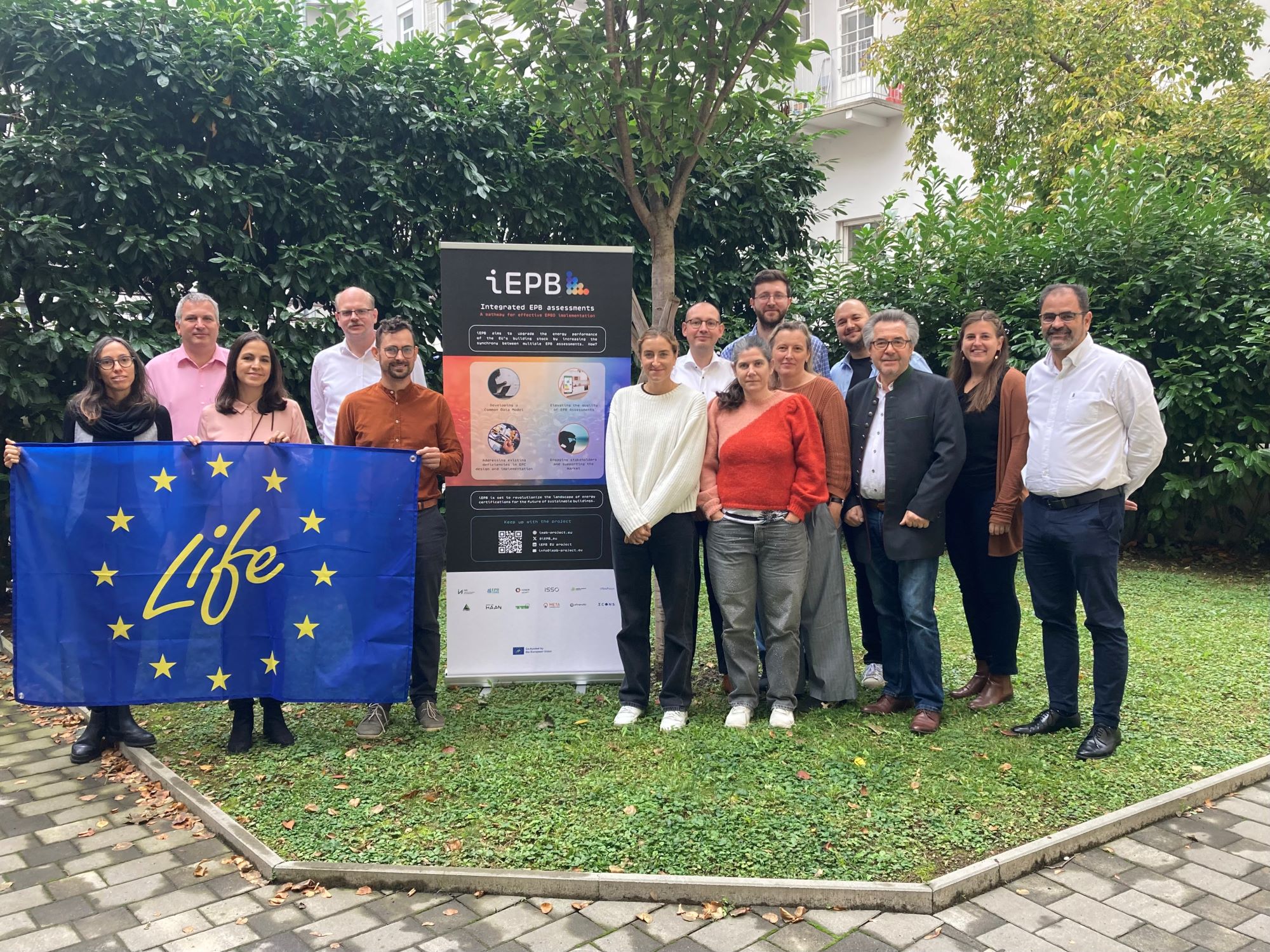
iEPB celebrates its first birthday in Graz

Short news | 2024.10.07

A productive General Assembly highlights the progress of the project and strengthens the consortium's shared goal

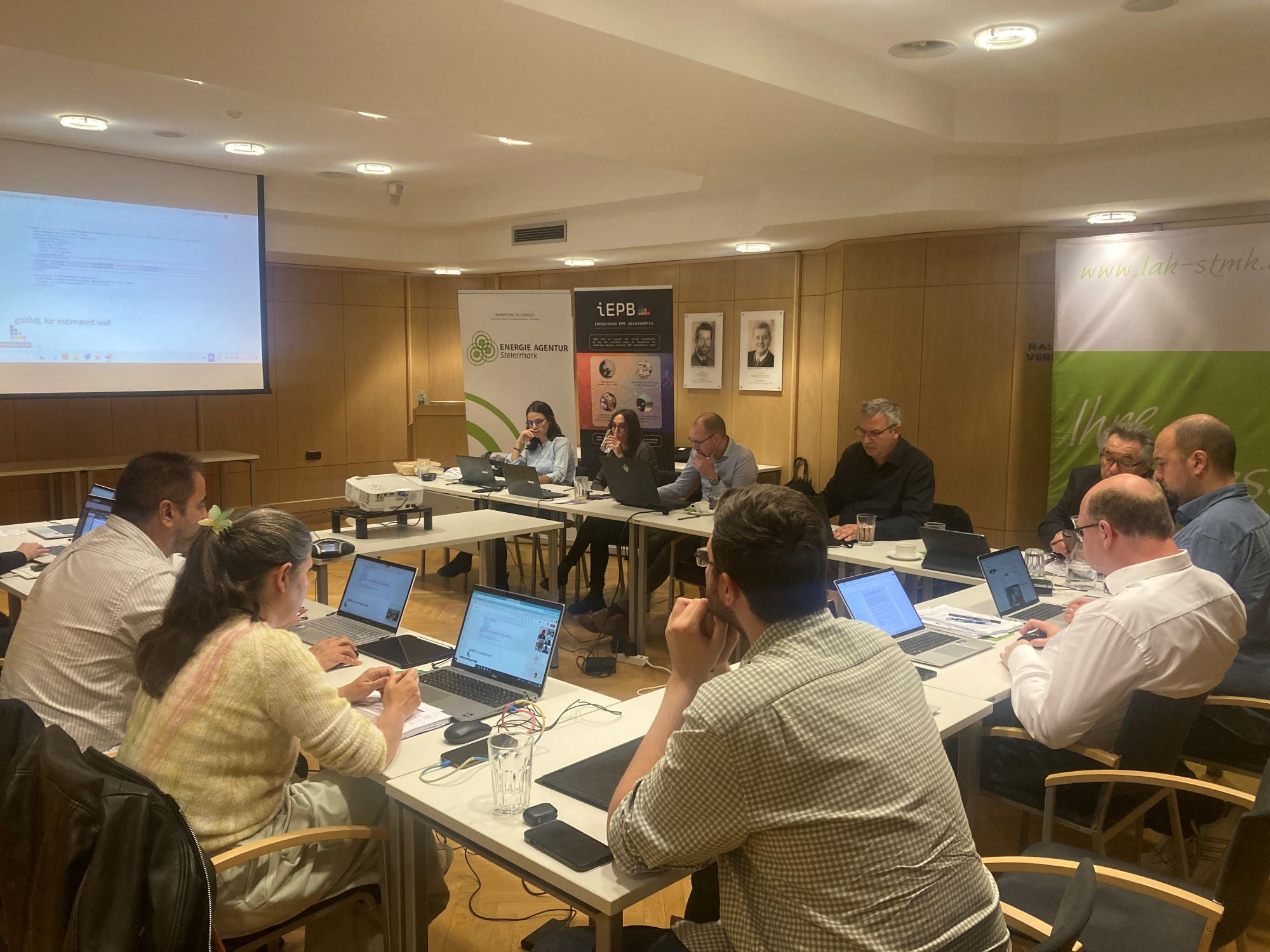
The iEPB consortium gathered for its General Assembly in Graz, Austria, from October 2nd to 4th, marking the 1st birthday of the project and also the second in-person meeting of the partners after the kick-off of iEPB.

The meeting was highly productive, with extensive discussions centered on the development of the project’s website and the innovative tools being created to advance the efficiency and synchrony of building energy assessments and performances. Partners have also presented their own work packages, by sharing their progress,  insights and updates on the various tasks and research areas. The face-to-face engagement fostered collaboration and strengthened the project’s path forward.

A key topic of discussion was the ongoing development of the iEPB web application, which is progressing well. The app is set to become a central tool for optimizing building energy performance, with user tutorials planned to ensure easy adoption. The exchange of ideas during the meeting proved invaluable in refining the innovative tools the project is working on.

In addition to internal progress, iEPB has maintained a strong presence at several energy-related events recently, raising awareness about its goals and outcomes. This engagement reflects the project’s growing influence in the field of sustainable building energy management.

This meeting was organized and hosted by Energie Agentur Steiermark, together with a historical tour of the city and a true Austrian-style dinner in the city center.

Featured image by Elias Maurer-Unsplash


Shaping the future of energy efficiency: iEPB joins forces at Sustainable Places 2024

Events | 2024.08.29

Discovering cutting-edge solutions and discussing energy efficiency implementation in Luxembourg

iEPB has announced its participation in the upcoming Sustainable Places Conference 2024, organized by the Luxembourg Institute of Science and Technology (LIST) and R2M Solution. This year’s event, held both in Luxembourg and online, will feature a critical workshop titled “EPBD Implementation: Facilitated & Enhanced by the Projects of the Next Gen EPC Cluster”.

Workshop Details:

  • Date: September 24, 2024
  • Time: 14:00-15:30 & 16:00-17:30 CEST
  • Location: Luxembourg & Online
  • Registration: Click here for details

About the Workshop:

This workshop, coordinated by the EPB Center and REHVA, aims to bridge the gap between the Energy Performance of Buildings Directive (EPBD) Recast and its practical application. By highlighting the achievements and ongoing work of the Next Gen EPC cluster’s projects, funded under the EU’s Horizon 2020, Horizon Europe, and LIFE Programmes, the session will offer valuable insights into the future of building performance assessment and energy efficiency in the European Union.

The workshop will include a moderated panel discussion, featuring key stakeholders and experts who will share their knowledge on the necessary steps and collaborative efforts required to meet the ambitious goals of the EPBD Recast.

iEPB’s Role and Contributions:

iEPB will be a central contributor to this workshop, presenting its innovative solutions for enhancing energy performance certification and building management, alongside projects like SmarterEPC, CHRONICLE, SmartLivingEPC, tunES, and EPBD.wise. Together they will react to the earlier discussions, fostering a dynamic dialogue and helping refinining strategies and ensure effective support for the EPBD Recast’s implementation.

Find more information here and join us to be part of this important conversation and contribute to the future of energy efficiency in Europe.

Picture by Stem List- Unsplash

iEPB engaged with many energy-focused projects for a clustering event

Short news | 2024.07.23

Leveraging new technologies and best practices for EU's energy efficiency, together

Last May, iEPB proudly participated in the Cross-programme Clustering Meeting organised by the European Climate, Infrastructure, and Environment Executive Agency (CINEA) in Brussels. This significant event brought together stakeholders from the building sector to address critical areas of action, including deep renovation, smart buildings and services, and building rating instruments.

The meeting featured representatives from a total of 46 projects spanning three major EU programmes: Horizon 2020, LIFE Clean Energy Transition, and Horizon Europe. With 70 participants, including project members and European Commission representatives, the event facilitated robust discussions and knowledge exchange.

Leticia Ortega (Instituto Valenciano de la Edificacion) represented iEPB during a panel session, while iEPB’s partner Andrei Vladimir Litiu (EPB center) appeared in the official video of the event talking about the importance of sharing good practices among projects and identifying synergetic collaboration for supporting the implementation of the EPBD at national level.

Don’t miss the wrap-up of the event in the official video available on BuildUP platform and here.

The projects presentations are also available for downloading here.

Picture by Headway-Unsplash